WASHINGTON (AN) — The International Monetary Fund was prepared to bring Ukraine's $8.2 billion loan package to its executive board within days, after the war-ravaged country met requirements and secured other financing assurances from partner nations, IMF’s top spokesperson said.
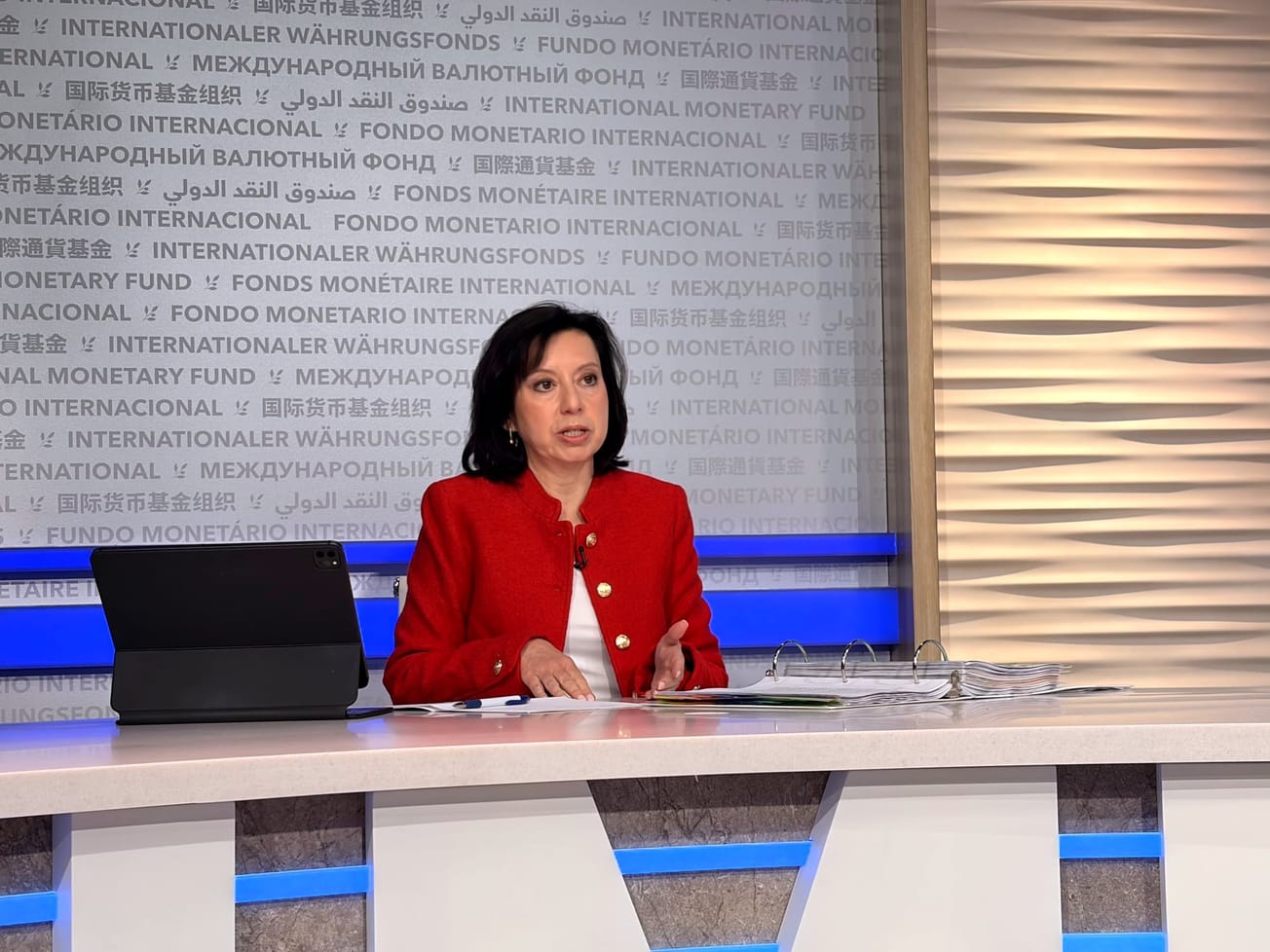
"The (Ukrainian) authorities have met all of the prior actions needed to move forward with the program request," Julie Kozack, director of IMF's communications department, told a press briefing on Thursday.
Those prior actions included the submission of a draft labor code law to parliament last month and the adoption of the 2026 budget in December in line with IMF program objectives.
"The total size of the program is $8.2 billion over four years. This program will help finance critical expenditures, maintain macro-financial stability, and unlock additional external support — support that will be vital for Ukraine in the years ahead," Ukraine's Prime Minister Yulia Svyrydenko said on social media.
In order to get to this point, Svyrydenko said on Saturday, the Ukrainian government and IMF agreed to ease some conditions, including sensitive tax increases, Reuters reported.
The agreement still faces a critical test in the Ukrainian parliament. It was not clear whether the parliament would approve IMF's most politically sensitive demand: new taxes on individual entrepreneurs. Ukrainian officials acknowledged the votes were far from guaranteed.
The board would decide whether the tax or any other preconditions are required before IMF approves the funding. "After the board meeting, they will lay out, of course, the near term conditionality, which, you know, will help support the program going forward," said Kozack.
Approval of the $8 billion package would bring economic benefits to Ukraine well beyond IMF's program itself.
IMF approval is a prerequisite for Ukraine to receive a €90 billion ($106.8 billion) loan from the European Union. In a press briefing last month, Kozack signaled IMF's backing for the broader financing effort, saying the global lending organization welcomed the European Council's agreement to provide €90 billion in financial support to Ukraine through 2o27.
The €90 billion package is structured to cover Ukraine's full financing needs through 2027, with €60 billion earmarked for weapons procurement through a special account approved by the EU, according to the German Marshall Fund. The loan is designed to be debt-neutral for Kyiv, repayable only once Ukraine receives reparations from Russia.
The German Marshall Fund described the €60 billion for Ukraine as a "survival budget." Ukraine’s military spending is now at nearly 43% the size of Russia’s military budget, which makes it sufficient to slow Russia’s advance but insufficient to enable a decisive Ukrainian breakthrough. The think tank also noted that this comes when U.S. support for Ukraine has become less reliable. Ukrainian officials are pushing to close the deal with IMF before the month is out.
"I would expect it in a matter of weeks," Ukraine's debt management head Yuriy Butsa told Reuters on the sidelines of meetings in London. "I think February is still doable in terms of a timeline."
IMF's requirements included the introduction of a value-added tax on entrepreneurs who earn more than 4 million Ukrainian hryvnias ($92,800) a year. Ukraine negotiated the threshold up from 1 million hryvnias, meaning two-thirds of sole traders would be exempt. Still, experts warned the tax could support expansion of the shadow economy.
But so far, according to the prime minister, parliament lacked the votes to approve the tax.
"Our partners expect that in March we will adopt these changes in the first reading and in general. But we are honest: the situation with votes in the parliament is difficult," Svyrydenko said.
The easing of conditions followed a visit of Kristalina Georgieva, IMF’s managing director, to Kyiv in mid-January. Ukrainian news agency RBC-Ukraine reported her visit was key to easing the loan program's conditions.
"The war continues to exact a heavy toll on Ukraine's people and on its economy," Kozack said, referring to the intensified aerial attacks through last year and into this year that have battered critical energy and logistics infrastructure. "After four years of war, [Ukraine] has settled into a slower growth path with a larger fiscal deficit and a larger current account deficit."
The full macroeconomic picture, she added, will be released in a staff report following the board meeting.