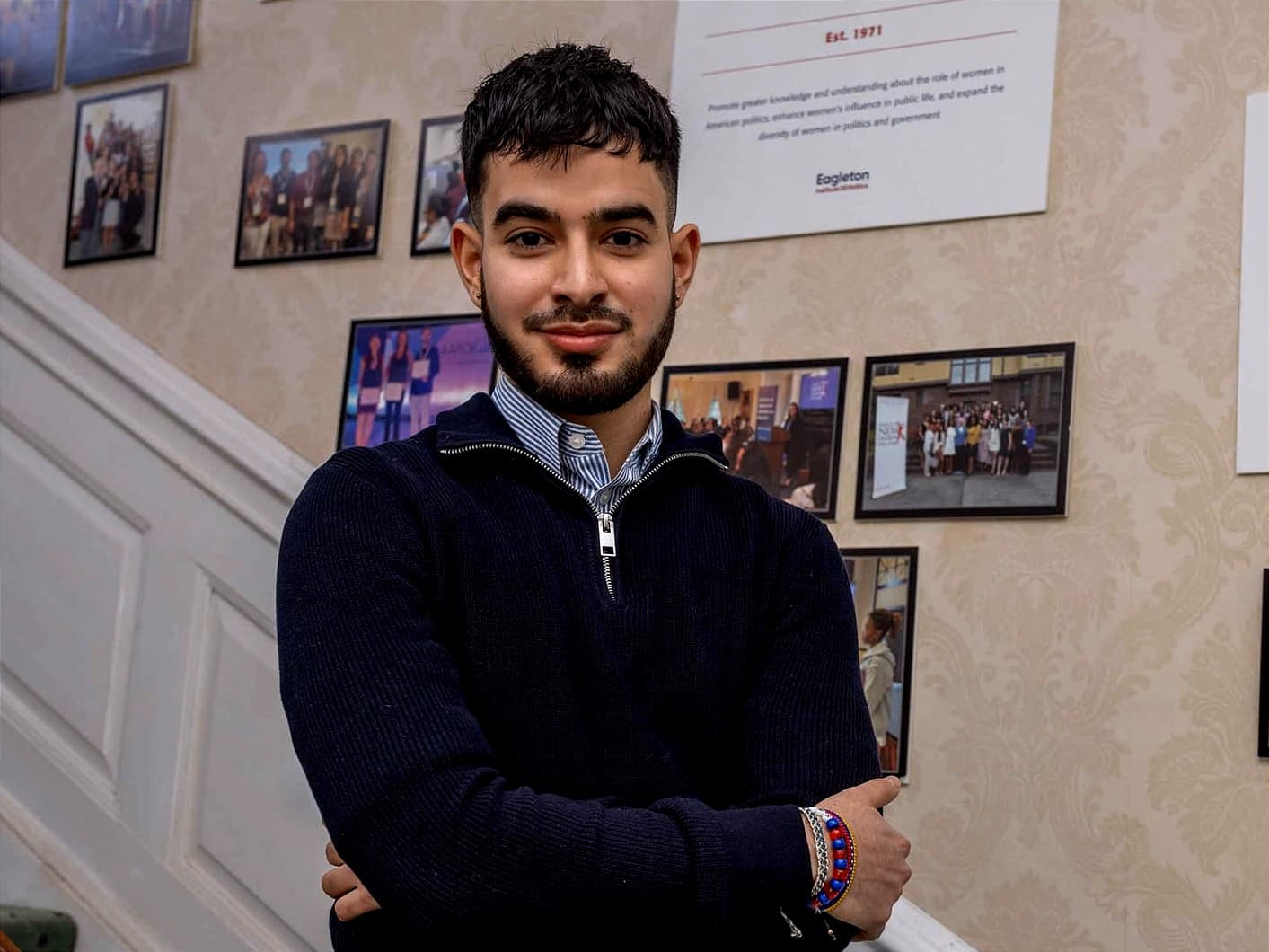
WASHINGTON (AN) — When Rafael Escalante checked his phone in a study break, he didn't expect to see Venezuela's capital ablaze with missiles.
At first he thought Caracas' unreliable power grid caused the blackout that night in January. It quickly became clear the United States had mounted an attack, and, as more details came to light, he felt a strong sense of relief.
"All of that emotion came to an end when President Trump gave his press conference," said Escalante, who fled Venezuela in 2019 due to the dangers he faced in an opposition group. He became a refugee in New Jersey, where he studies political science and public policy at Rutgers University.
"At that moment I started getting worried," he said of the Trump administration's Operation Absolute Resolve, which removed the president, Nicolás Maduro, from the country in early January and brought him to the U.S. to face criminal charges. "And then I saw how quickly the regime reaccommodated itself."
As Maduro's vice president, Delcy Rodriguez, took over and began cooperating with American demands, Venezuelans around the world voiced mixed opinions of the U.S. intervention. Human rights groups and activists across the U.S. predict a brighter future for Venezuela without Maduro, but say it may take time.
The United Nations has investigated Venezuela's human rights record for years. In 2019, the U.N. Human Rights Council in Geneva created an independent fact-finding mission to investigate allegations of “extrajudicial executions, enforced disappearances, arbitrary detentions, torture and other cruel, inhuman or degrading treatment since 2014.”
In 2024, the mission reported that security forces aligned with Maduro raided the homes of dozens of suspected critics of the government, often relying on social media videos as “the only evidence.” Its report found Venezuela facing “one of the most acute human rights crises in recent history,” based on testimony gathered before and after the country’s disputed election that returned Maduro to power for a third term.
In its latest findings presented on Thursday to the Human Rights Council, the U.N. mission said many of the same structures responsible for past abuses remain in place despite Maduro’s removal from power. Investigators reported "the structures that have sustained persecution for years have not been dismantled, nor have state policies been announced to begin that process," and documented dozens of politically motivated detentions since January, warning that Venezuela cannot be considered on a genuine path to reform unless that apparatus is dismantled.
The mission called for the unconditional release of political detainees and urged authorities to allow international investigators full access to the country as Venezuela enters what human rights officials describe as an uncertain transitional period. Its findings reinforce concerns among activists that removing Maduro alone may not be enough to take apart the political and security structures that enabled years of repression.
Activists like Escalante found the international response ineffective.
"I was a strong believer of international law," he said. "We did everything in Venezuela to promote a democratic transition. Unfortunately, none of our efforts worked beyond strongly worded letters."
The question of international law – and elections
Despite their policy disagreements with Trump, activists have generally viewed his approach to neutralizing Maduro as controversial but effective, even though the regime itself remains largely in place.
"People say he violated international law to take Maduro out," said Maria 'Mariale' Marquez, a Venezuelan activist based in Miami. "Maduro had been violating international law. What has been done?"
Although the forceful removal of a nation's leader violates the sovereignty that is a bedrock principle of international law and the U.N. Charter, Trump and many activists countered that Maduro was not a democratically elected leader. After blocking the popular opposition leader, Maria Corina Machado, from running for president in 2024, Maduro lost the election yet still clung to power amid widespread protests and alleged election fraud.
"This created a situation where, unfortunately, the only solution that was available was one where all international procedure and legislation had to be violated," said Marquez, head of the Venezuela Asset Recovery Initiative, which works to recover and return assets looted by corrupt officials.
As Venezuelan finances come under U.S. control, Marquez's Florida-based organization, known as INRAV, has fresh concerns. At a U.S. Senate hearing in late January, U.S. Secretary of State Marco Rubio said the Trump administration will audit an initial $500 million in proceeds that it oversaw from the sale of Venezuelan oil and were placed into an account in Qatar.
Rubio said about $200 million was still being held in a temporary, monitored account in Qatar that was created to hold proceeds from Venezuelan oil sales and prevent seizure by creditors. U.S. authorities say they will transfer those funds to Treasury-controlled accounts and use strict, third-party audits to ensure the money is spent on humanitarian aid.
As INRAV tracks the funds, which now top $1 billion, it sees no improved Venezuelan accountability. "We are in an environment of institutional weakness, where there are no guarantees that resources will be used transparently for the benefit of the population," Marquez said. "That situation has not changed with what has happened; it remains the same."
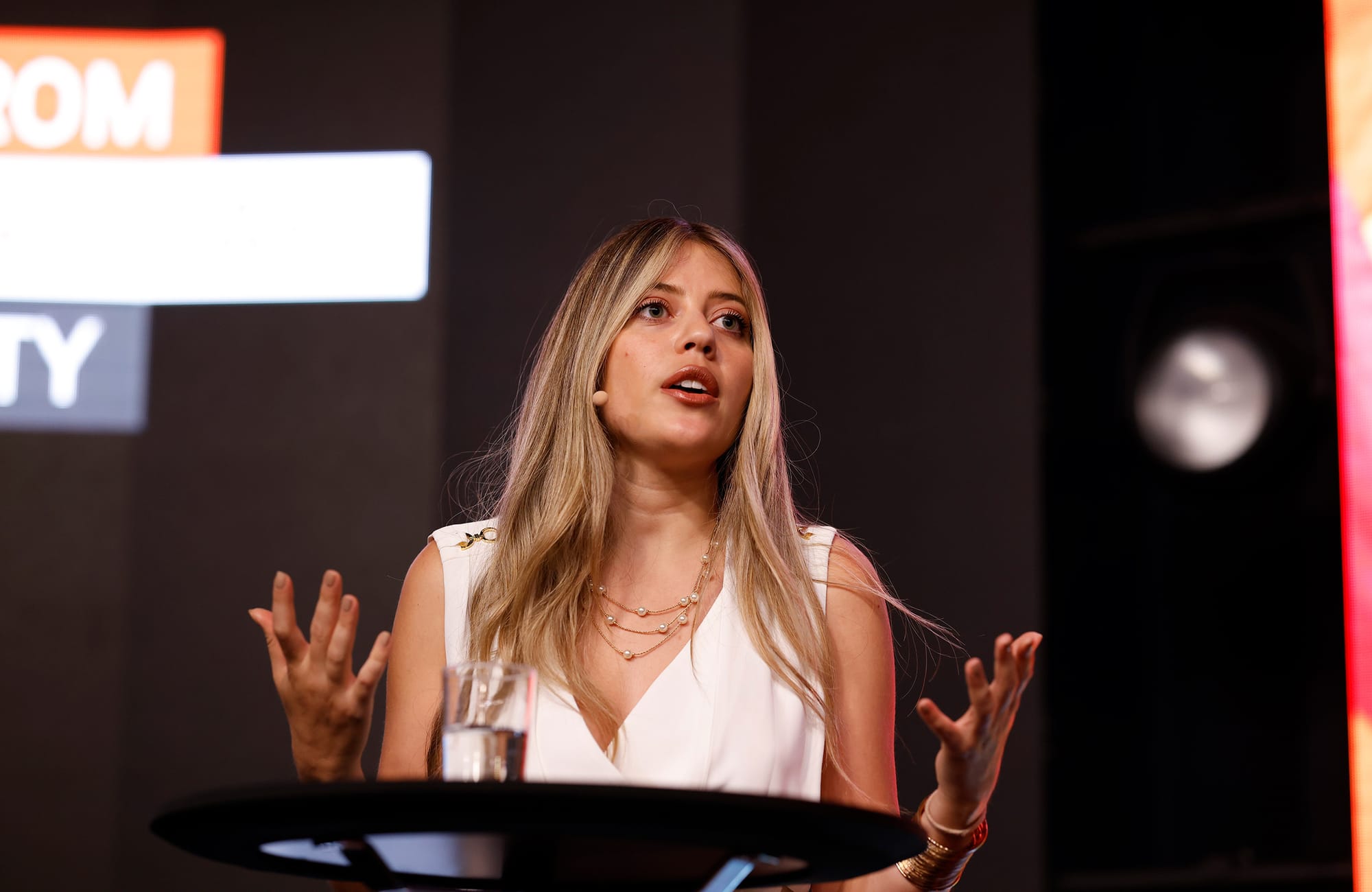
That skepticism of international institutions also permeates Génesis Davila's work as founder and president of Defiende Venezuela, a pro-bono legal counsel for Venezuelan victims of human rights violations. Venezuelan courts act as a tool of Maduro's regime, she said, giving human rights violators near-total impunity despite his removal from power.
"There is no real opportunity for victims to have justice inside Venezuela," Davila said. "The justice system is co-opted by Nicolas Maduro's regime. Far from helping you, trying to use it can put you at risk."
The Trump administration has provided no indication of how long the transitional government might last or when elections might be held in Venezuela. No clear answer emerged even after Machado met with Trump in January at the White House, where they discussed elections.
Some activists, including Davila, worry democracy won’t be possible as long as the ruling regime continues to control political institutions.
"It's like a monster with many heads," she said, referring to the Venezuelan government. "The first was Maduro, but we're now seeing how, little by little, the other heads are rearranging themselves."
The long path toward justice
Since Rodriguez became interim president, activists say there has been no significant change to key Venezuelan institutions that could restore justice to citizens despite U.S. reassurances the situation is now under control.
After Trump announced Maduro's capture to face drug trafficking charges in the U.S., he portrayed Rodriguez as a stabilizing U.S. partner. Yet Rodriguez, who also serves as oil minister, has been a "priority target" of the U.S. Drug Enforcement Administration since 2022 for allegations ranging from drug trafficking to gold smuggling, The Associated Press reported. Venezuela holds the world's largest proven oil reserves, but the nation produces only about 1% of global oil output due to years of mismanagement, sanctions and decaying infrastructure.
Venezuela also has major reserves of gold, rare earths and other minerals the Trump administration wants to control. For years, Rodriguez strongly supported the Chavista regime, a left-wing populist, socialist movement that has voiced anti-U.S. sentiment in Venezuela since its was founded by Hugo Chávez in 1999 and continued under Maduro. Some agree with Rubio's view, however, that Venezuela is transitioning toward democracy.
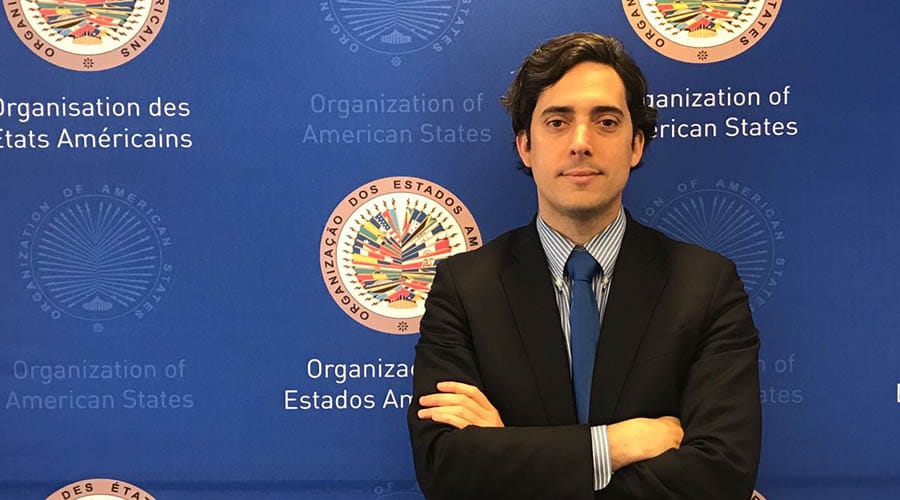
"As a Venezuelan, my only worry is that there won't be elections," said Rodrigo Diamanti, who in 2009 founded Un Mundo Sin Mordanza, a Venezuelan non-governmental organization for freedom of expression and human rights. "But I don't think the people will let that happen."
Diamanti, whose organization coordinates protests, media campaigns and other events within Venezuela and globally, has in the past been detained by Venezuela's Bolivarian National Intelligence Service. Among his organization's ongoing demands to the Venezuelan government is a call to release all political prisoners and ensure a new election for president.
“Elections next year are inevitable," he said. Trump and Rubio, Diamanti added, "don't have a way to prevent" a push for democratic elections and are too preoccupied with other issues to lead the region on their own.
Hope remains within Venezuela and its diaspora
The Venezuelan government denies holding political prisoners but has released hundreds of them since earlier this year. The Trump administration has urged Venezuela to speed up its release of political prisoners; Marquez says she suspects hundreds more are being held.
More people than ever have been reaching out to Defiende Venezuela to have their cases argued and heard, according to Davila, who hopes that after a transitional period, the people her organization works with can have their cases heard on Venezuelan soil in a system free of corruption.
"Many victims and their families have written to me to tell me they finally feel like justice is being done," she said.
Escalante protested on campus and outside the prison holding Maduro, but fears he cannot safely travel to Venezuela. "What I see is a new Venezuelan government that is on the good side of the United States and is trying to consolidate its power by making itself an ally to the administration," he said. "The story of Venezuela should be told by Venezuelans."
Despite their concerns, some Venezuelan activists inside and outside the country say that since Maduro's ouster they feel more hopeful about building a future democracy than they have for many years.
"If there's a perfect moment for activism, it's now," Diamanti said. "We have our worries, but compared to how the situation was before it's a dream."
Correction: An earlier version incorrectly interpreted a portion of Diamanti's interview about U.S. involvement and Venezuelan elections.