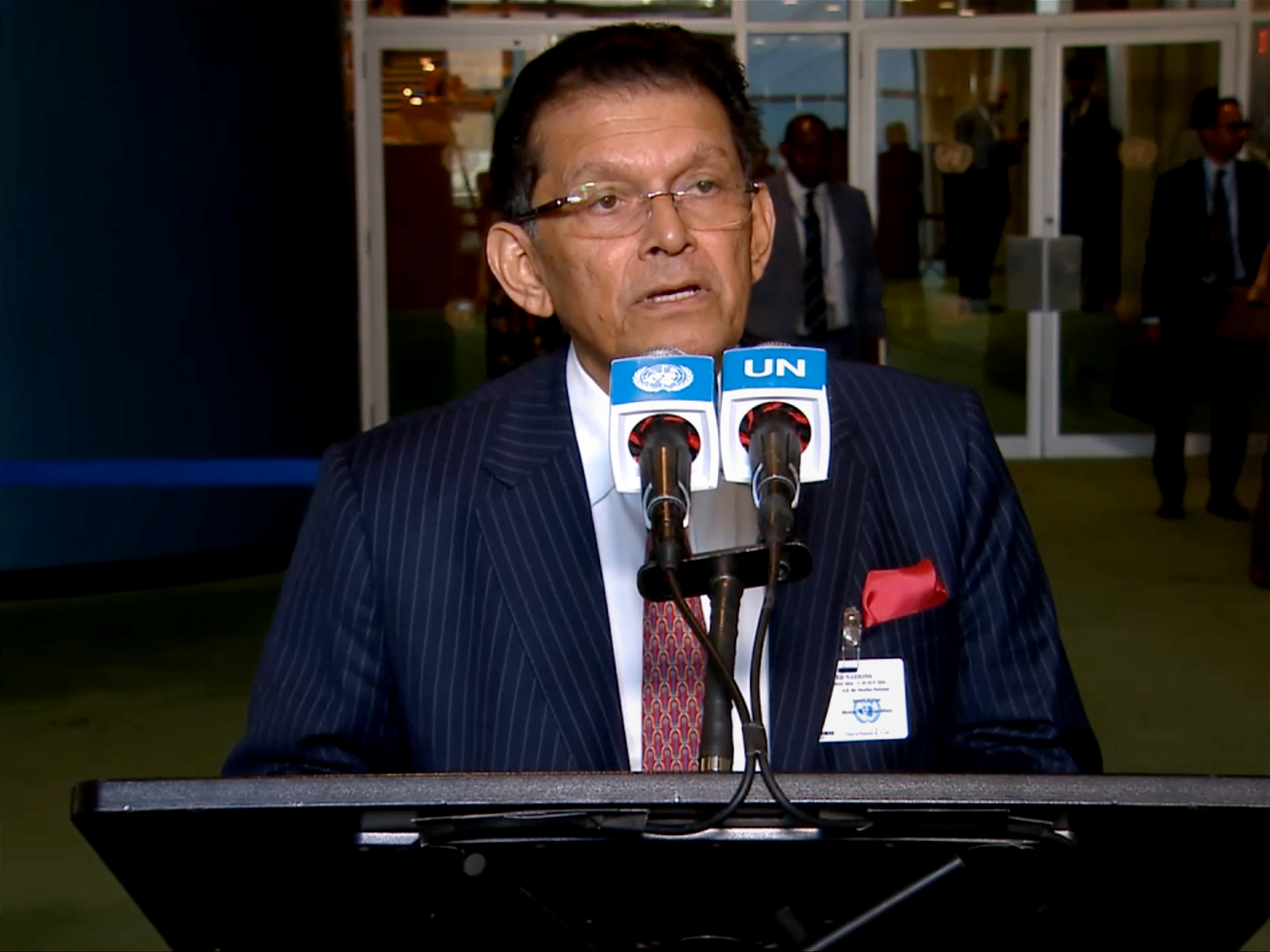
Bangladesh's top diplomat Khalilur Rahman was elected president of the United Nations General Assembly after an unusually close vote that highlighted growing competition among member nations over the future direction of the world body as it enters a far-reaching reform process.
Rahman defeated Cyprus candidate Andreas Kakouris by 99 votes to 91 in a secret-ballot election on Tuesday, one of the rare contested races for the presidency of the 193-member Assembly. While the office carries limited formal authority, the unusually narrow result comes at a moment when the Assembly is poised to oversee implementation of the U.N.'s most ambitious restructuring effort in decades.