The A.U.-E.U. Innovation Agenda is entering a new phase as African and European officials seek to move beyond research cooperation toward strengthening and connecting the innovation ecosystems needed to translate scientific knowledge into economic and social impact.
Presenting the state-of-play of the Agenda's implementation, Vincenzo Lorusso of the European Commission and Lukovi Seke of the African Union Development Agency-NEPAD said the partnership is increasingly focused on youth entrepreneurship, technology transfer, university-industry collaboration and strengthening the institutions that connect research with investment, manufacturing and markets.
The biannual workshops organized since November 2023 by the A.U.-E.U. Innovation Agenda Working Group are intended to build a growing community of practice around the implementation of the Agenda, said Lorusso, a policy officer for E.U.-Africa cooperation on science, technology and innovation and E.U. chair of the A.U.-E.U. Innovation Agenda working group. "We really need to make sure there's a steady implementation that is as collective and as collaborative as possible," he said.
The sixth edition of the workshop series, held on July 23, focused specifically on youth-led innovations.
Seke said research must produce tangible benefits rather than end only with scientific publications. "Innovation is crucial," said Seke, a principal program officer for African STI indicators and A.U. chair of the A.U.-E.U. Innovation Agenda working group. "We just need to inform the younger ones to use innovation as an instrument for peace in a very changing world."
For decades, European cooperation emphasized scientific research partnerships across Africa. Those collaborations produced important advances in public health, agriculture and other fields, but often stopped short of generating the companies, manufacturing capacity, skilled jobs and innovation ecosystems needed for sustained economic transformation.
The Innovation Agenda, adopted jointly by the African Union Commission and European Union on July 19, 2023, was designed to bridge that gap. Their ambitions reflected a broader shift in thinking about science diplomacy and international development. Scientific cooperation was increasingly viewed not only as a source of knowledge, but also as a foundation for economic growth, industrial development, supply chains and geopolitical partnerships.


Vincenzo Lorusso of the European Commission, left, and Lukovi Seke of the A.U. Development Agency-NEPAD. (A.U.-E.U.)
Lorusso said the workshop marks an important milestone as the Agenda's "short-term actions" approach their scheduled conclusion at the end of 2026. At the second A.U.-E.U. Research and Innovation Ministerial Meeting, to be held Oct. 27 in Addis Ababa, officials will present the assessment of the second and third years of implementation to the research and innovation ministers of both unions.
The October ministerial is also expected to formally incorporate "AI in Science" and "Science Diplomacy" as new workstreams within the broader A.U.-E.U. research and innovation partnership.
During the workshop, Bachir Saley of the African Union Commission and Nienke Buisman of the European Commission emphasized the importance of youth-led innovation.
"This affirms the importance of leveraging youth energy and creative entrepreneurship to realize the full potential of this Agenda in Europe as well as in Africa, a continent where 70% of the population is below the age of 30," Buisman said.
An independent analysis by The Science Diplomat and Arete News of the Agenda's implementation dashboard, together with interviews with officials involved in its design and implementation, suggests that shift is beginning to take shape.
The A.U.-E.U. Innovation Agenda Dashboard now includes approximately 80 initiatives spanning public health, renewable energy, climate resilience, agriculture, scientific infrastructure, digital technologies and research capacity-building.
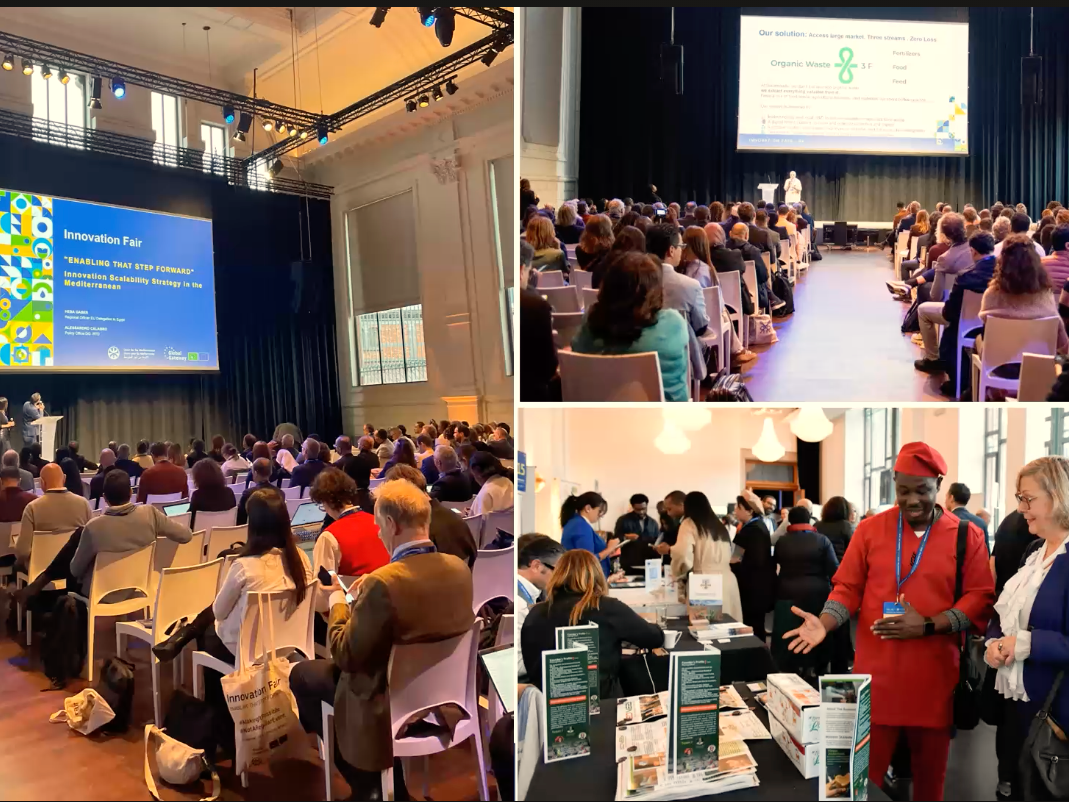
Many of these themes were reflected throughout Thursday's discussions, where officials, innovation hubs and startup founders described how implementation is beginning to move from policy design toward practical support for young innovators.
The analysis suggests the Agenda's implementation is broadly aligning with the priorities described by officials at the workshop. Many of the largest initiatives remain concentrated in health, climate and research capacity, while direct support for startups represents one component of the broader implementation portfolio.
The workshop offered concrete examples of how the Agenda's support mechanisms are beginning to operate beyond policy documents, particularly for youth-led innovations.
"We have a network of over 200 accelerators and incubators spanning across 37 countries," said Zandile Ntuli, who manages the ENRICH in Africa Center (EiA) in Cape Town, an organization that builds business bridges between Africa and Europe, stemming from the Horizon 2020 project ENRICH in Africa. "And many of these champion incubators – we call them champions – are dedicated to supporting youth-led innovations and entrepreneurship, making today's discussion especially relevant to our shared mission."

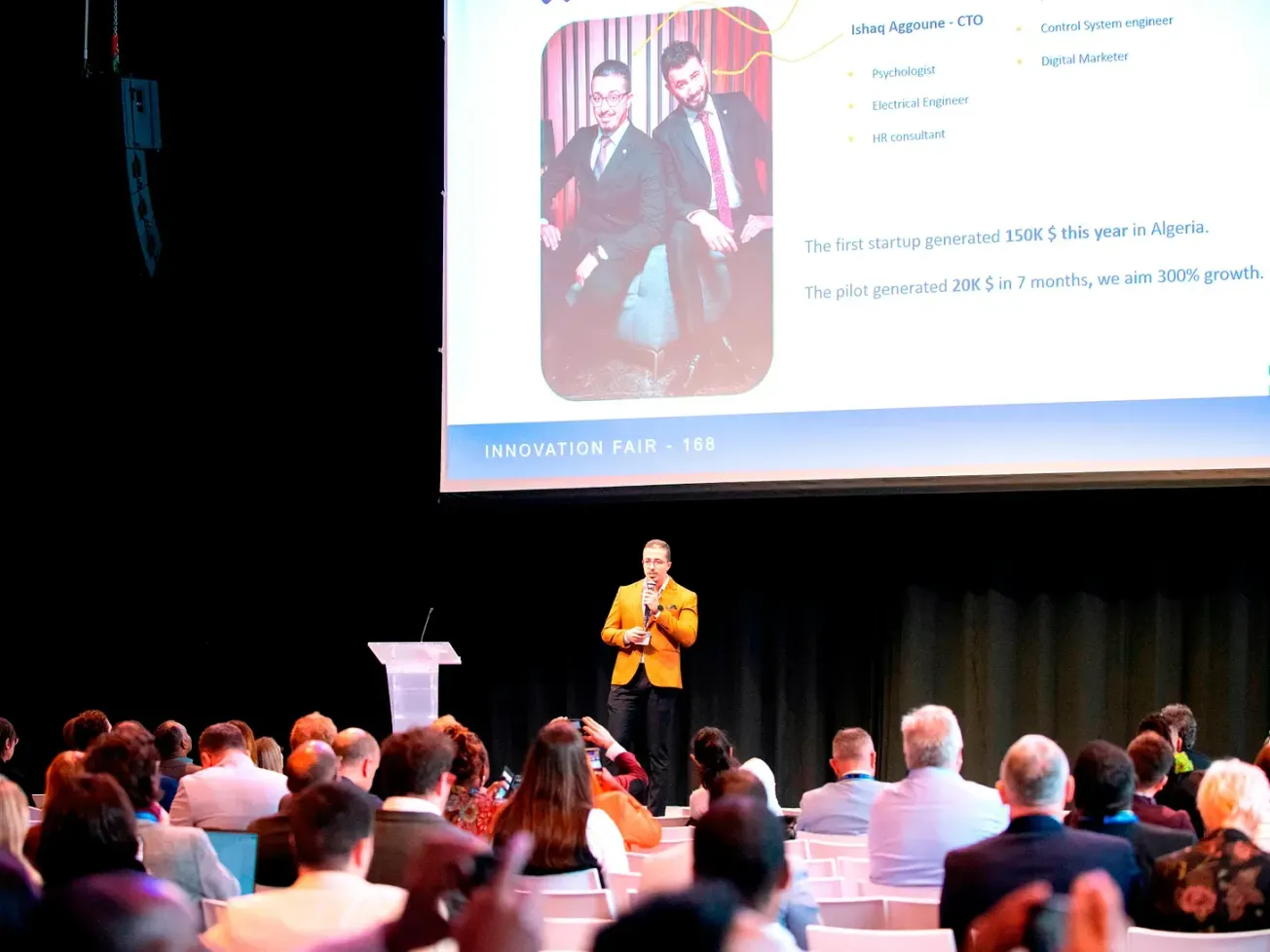
Adeoye Samuel Adeboye and Avwerosuoghene Great Esosuakpo, founders of the Nigerian startup Isio, said participating in last year's Innovation Fair, as well as the ensuring support provided by the Africa-Europe Innovation Platform (AEIP), connected them with mentors, investors and business-development support that fundamentally changed their company's trajectory.
"The greatest gift we got was access to a mentor," Adeboye said, referring to entrepreneur Neil Choudhary. "He helped us revisit our assumptions and make sure that we build a leaner, stricter product."
Esosuiakpo said the follow-up mentoring helped prepare the company for investment by exposing weaknesses in its business model and teaching founders how investors evaluate startups. "It basically helped us understand what it meant to be investment ready as a startup," he said.
Lorusso said that continuing support between annual Innovation Fairs is a key part of the Agenda's design, with initiatives such as the Africa-Europe Innovation Platform, ENRICH in Africa and the EuroQuity platform intended to help startups continue developing after the events conclude.
Coach and business developer Tom Lismonde of Ovation Lab in Brussels encouraged founders to focus less on perfection than opportunity. "The pitch doesn't have to be perfect," he said. "You just have to get in front of the people."

The A.U.-E.U. Innovation Agenda was designed around a broader idea: that innovation depends on networks connecting researchers, entrepreneurs, investors, governments and industry. Its objectives explicitly focus on strengthening innovation ecosystems, technology transfer, public-private partnerships, entrepreneurship and access to finance. The six workshops held to date have covered all these areas.
The dashboard data suggest that implementation is concentrating in a handful of major sectors.
The largest initiatives include the Partnership for Research and Innovation in the Mediterranean Area, or PRIMA; the Global Health EDCTP3 Joint Undertaking; and major programs supporting vaccine manufacturing, renewable energy, research capacity and scientific infrastructure.
The portfolio of initiatives contributing to the implementation of the A.U.-E.U. Innovation Agenda points to a strategy focused on long-term capacity-building rather than short-term project funding. While entrepreneurship and startups remain important themes throughout the Agenda, many of the largest investments are directed toward strengthening institutions, expanding scientific capabilities and building the foundations for future innovation.
The first formal assessment of the Agenda points in a similar direction. According to the European Commission's first-year review, the number of joint African-European patents rose 17%, from 236 before the Agenda's adoption to 277 during its first year of implementation from July 2023 to July 2024. Participation by African researchers in Marie Skłodowska-Curie mobility programs jumped 207%, from 51 to 157, while several initiatives reported creating new businesses and jobs. The assessment also found evidence that some partnerships were beginning to move beyond traditional research outputs toward innovation ecosystems connecting researchers, entrepreneurs, investors and industry.
At the workshop, Agyemang Okyere Darko, a project management officer at the Association of African Universities in Ghana, referred to the newly launched AEIP Scholars Program 2026-2027, saying it "aims to foster collaborative research and innovation between African and European scholars by aligning academic work with the A.U.-E.U Innovation Agenda, particularly on the capacities for science actions and by strengthening intercontinental partnerships through solution-driven research."

The concentration of initiatives listed in the dashboard partly reflects the history of scientific cooperation between the two continents, according to Brando Okolo, head and senior adviser on science, technology and innovation at the African Union Development Agency-NEPAD.
Large health programs, particularly the Global Health European and Developing Countries Clinical Trials Partnership, were already supported by substantial funding and established institutional relationships when the Innovation Agenda began, he said.
“What we see really is historical relationships building into that,” Okolo, who did not take part in the workshop, said in a separate interview. “Those historical relationships have always been around health and climate.”
But history alone does not explain the challenge ahead. A persistent gap, Okolo said, lies between producing research results, transferring the underlying technology and finding companies willing and able to develop it commercially.
"There is no amount of cash you throw on it that will bring new efficiencies to it," he said. African Union institutions are therefore working to organize scientific bodies and innovation agencies into a more coherent continental ecosystem, including a planned alliance focused on technology transfer.
Those historical relationships also shaped the broader geopolitical context in which the Innovation Agenda emerged. China, the United States, India, Gulf countries and the European Union have all sought to deepen relationships across the continent through investment, infrastructure, trade and technology partnerships.

For Europe, the Innovation Agenda represented an effort to compete in a different way. Rather than emphasizing infrastructure projects alone, European policymakers sought to build on what they viewed as comparative strengths: universities, research institutions, scientific collaboration, regulatory expertise and innovation networks.
The initiative also sought to address longstanding criticism that international research partnerships have too often favored institutions in wealthier countries. The Agenda therefore places unusual emphasis on co-creation, co-ownership and more equitable partnerships between African and European participants.
Yusuf Sheriff, special adviser on strategy to the executive vice chairman of the Nigerian Communications Commission, said in a separate interview that international innovation partnerships are often most effective when they focus on creating the enabling conditions for innovation rather than funding individual projects. "Your goal here is to build the kind of infrastructure, educational systems, business and regulatory landscape that kind of encourages your small, medium players, academic institutions to explore," he said.
The pattern mirrors priorities highlighted at the 9th A.U.-E.U. High-Level Policy Dialogue on Science, Technology and Innovation in November 2025, where officials from more than 40 African and European countries reviewed cooperation in health, agriculture, climate and scientific capacity-building and discussed future collaboration in science diplomacy and artificial intelligence in science.

The Agenda's first three years also illustrate a broader lesson. Producing scientific knowledge is one challenge. Building and strengthening institutions capable of translating that knowledge into businesses, industries and employment opportunities is another.
Through funding programs, thematic partnerships, workshops and networking platforms, the Innovation Agenda is attempting to build a broader Africa-Europe innovation community connecting researchers, entrepreneurs, investors and policymakers. And a portfolio of projects does not automatically constitute an innovation ecosystem.
Organizers said the workshops and Innovation Fairs are intended to be continuing mechanisms rather than standalone events, with participants receiving follow-up support through several Africa-Europe innovation programs.
Lorusso said the next phase will require greater joint funding from African and European institutions, stronger participation by member states and more private-sector involvement if innovative ideas are to become marketable products and businesses.
Okolo offered a cautiously positive assessment of the Agenda’s first three years. Given the constraints facing the partnership, he said he would give its performance “a passing mark” — somewhere in the 70% range.
He said he had been encouraged by the startups, young innovators and enterprises presented at meetings in Brussels in 2025, as well as the financial support that enabled African participants to attend.
By the end of the Agenda’s 10-year term, he said, success would mean more than additional programs or funding commitments. He would want to see African and European companies working together, shared intellectual property, jointly developed standards, fewer restrictions on African participation and research laboratories established in Africa that draw European scientists to the continent.
“Building up an ecosystem is a process,” Okolo said. “It’s not something, with a flick of a finger, that happens."