Skip to content

Switzerland's ‘Glacier Loss Day' signals a shrinking water reserve

Scientists say glacier retreat is starting to reduce the amount of meltwater available during extreme heat and drought.

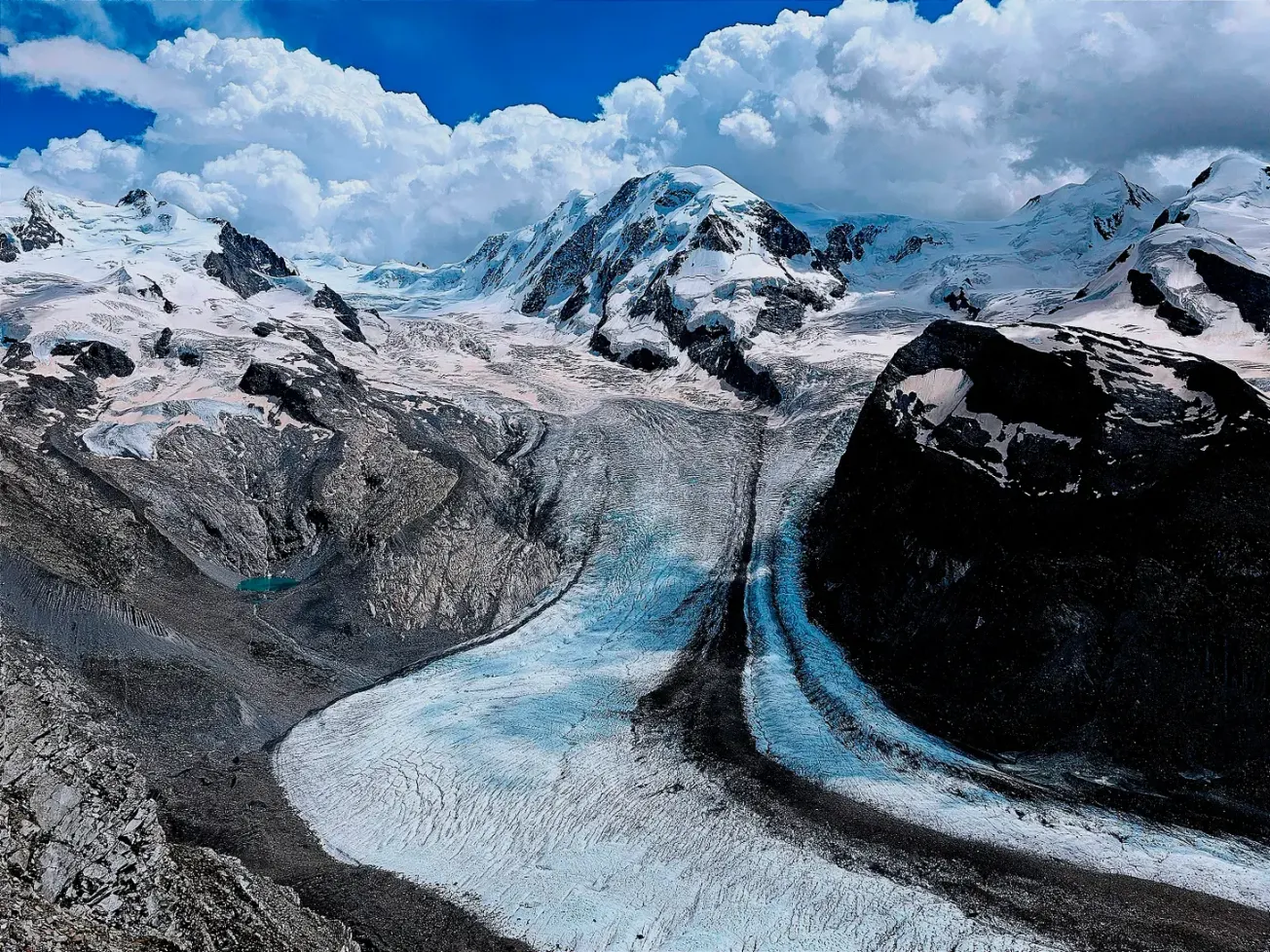
The Gorner Glacier above Zermatt, now the third-largest glacier in Switzerland (having been surpassed by the Fiescher Glacier due to fragmentation), shrank by significantly more than 10% over the last half-century. It dropped from 59.73 km² in 1973 to an estimated <41 km² by 2023, as confirmed by the catastrophic melt rates reported by GLAMOS/Glacier Monitoring Switzerland. (AN)

ZURICH (AN) — Switzerland's glaciers will exhaust their seasonal snow reserves on Monday, marking what scientists call "Glacier Loss Day" — the point at which every additional liter of meltwater comes directly from glacier ice rather than accumulated winter snow.

Researchers at ETH Zurich and the Swiss Federal Institute for Forest, Snow and Landscape Research, or WSL, said the date arrives unusually early this year following low winter snowfall, Saharan dust deposition and a June heatwave that has accelerated melting across the Alps.
Get full Free+ access with a free subscription

Join now

Already have an account? Log in

Latest