Skip to content

What the U.S. AI showdown reveals about competing governance models

As the Pentagon seeks sovereign authority, the U.N. advances redistribution, dialogue and shared technical baselines.

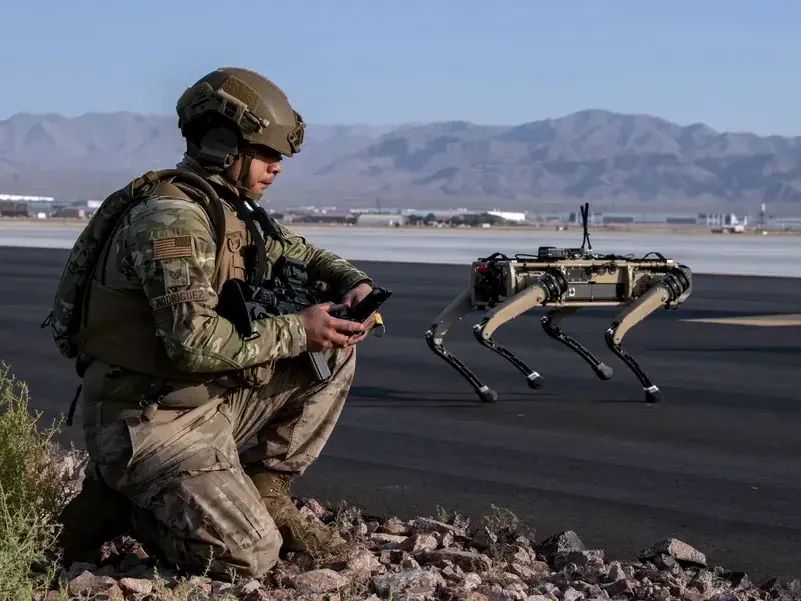
A U.S. Air Force technical sergeant uses a robot equipped with advanced sensors, including thermal and infrared video, combined with AI.
A U.S. Air Force technical sergeant uses a robot equipped with advanced sensors, including thermal and infrared video, combined with AI to assess potential threats at a simulation on Nellis Air Force Base in Nevada in 2020. (USAF/Cory D. Payne)

WASHINGTON (AN) — For more than a decade, diplomats in Geneva have wrestled with a question that once felt speculative: What happens when machines begin to make battlefield decisions?

The meetings, held in U.N. disarmament forums, have produced draft principles, warnings and stalled proposals. Advocacy groups have called for binding rules to ensure "meaningful human control" over autonomous weapons. The International Committee of the Red Cross has cautioned that delegating lethal force to algorithms risks eroding the legal foundations designed to protect civilians.

Get full Free+ access with a free subscription

Join now

Already have an account? Log in

Latest