Skip to content

Iran war drains U.S. missile defense supplies as Ukraine's needs grow

Patriot interceptor shortages from the U.S. are raising concerns about future support for Ukraine and Europe.

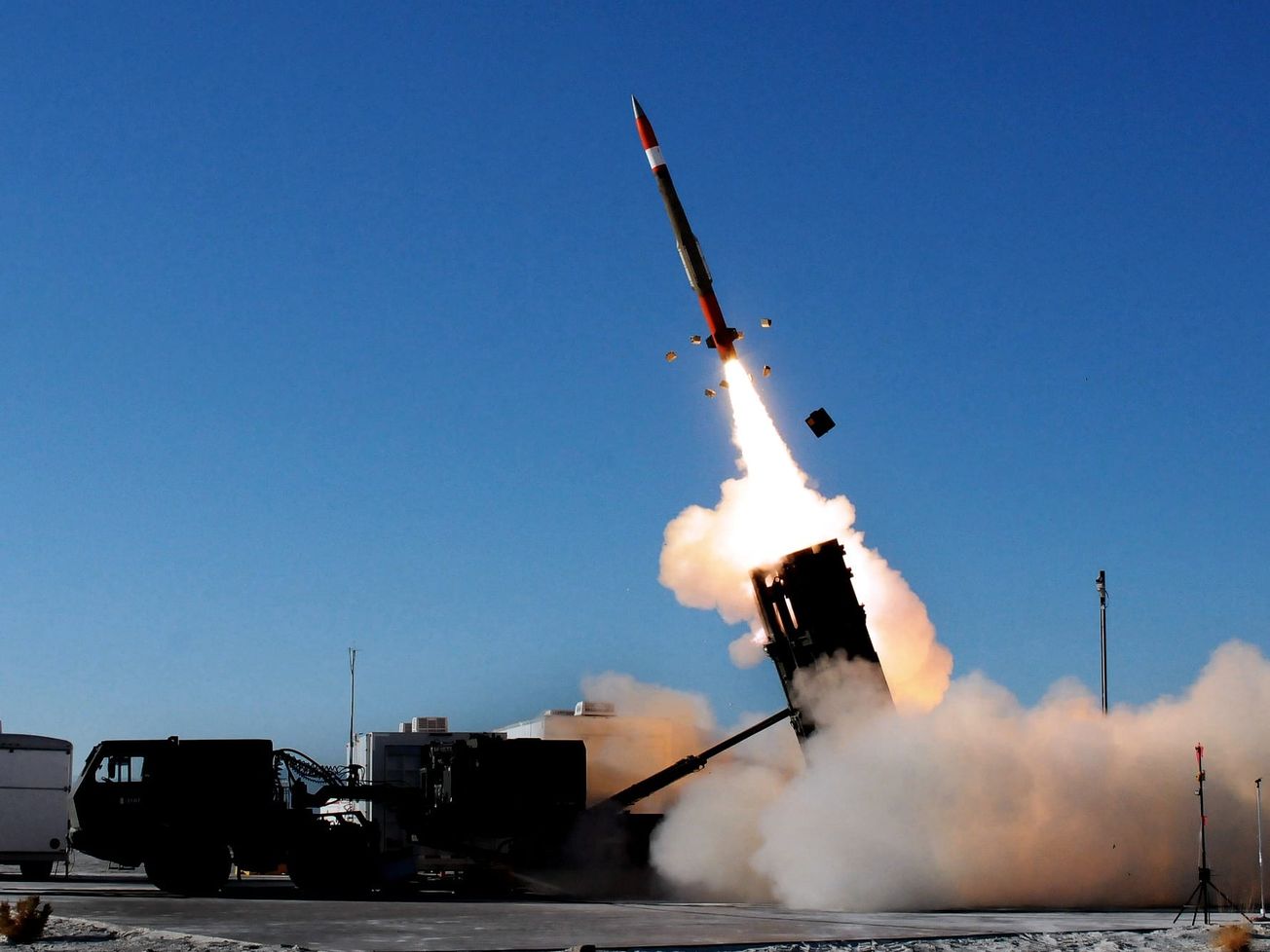
A U.S. crew launches a Patriot missile during a test at New Mexico's White Sands Missile Range.
A U.S. crew launches a Patriot missile during a test at New Mexico's White Sands Missile Range. (John Hamilton/U.S. Army)

WASHINGTON (AN) — Hundreds of missiles and drones battered Kyiv late last month in one of the most devastating Russian attacks on Ukraine’s capital since the start of the war. The attack was part of Moscow's escalating air war against Ukrainian cities. Defending against such bombardments requires Patriot interceptors and other U.S.-supplied air-defense systems — weapons whose stockpiles have been depleted by the Iran war.

As fighting between the U.S. and Iran heated back up this month, experts say Ukraine’s missile defense problem could worsen.


Lesya Yastrubetska, whose husband’s relatives live in central Kyiv, described to Medill News Service the destruction wrought by last month’s blasts, which blew out their apartment’s windows and doors.

“Thank God they were at the country house at the time of the attack,” said Yastrubetska, who moved from Ukraine to Chicago following the outbreak of the war. “It is a terrible feeling when death threatens peaceful people at any moment.”

The combined drone and missile assault killed two in Kyiv and wounded more than 80, according to Ukrainian authorities.

While Ukraine has developed a world-leading counterdrone program, it still relies on the U.S.’s Patriot system to defend against ballistic missiles, as does the rest of Europe. U.S. interceptor stocks, however, were heavily depleted during the Iran war, throwing into doubt a continued flow of high-end defensive munitions to European allies as the U.S. looks to replenish its losses.

"There is essentially no other countermeasure against missiles than the Patriot,” said Roger Djupsjo, a major in the Swedish Army and an instructor at the Swedish Defense University who has worked extensively with the Ukrainian military.

“That is why it is obviously very sensitive when you don't have enough Patriot interceptors or enough systems overall,” Djupsjo said. “Because then you simply cannot counter all the incoming missiles.”

Earlier this week, Russia lobbed more than 70 missiles and 600 drones at Kyiv and other Ukrainian cities, killing at least 10 people and damaging a 950-year-old cathedral, the country’s authorities said. In another attack earlier this month that featured roughly the same number of missiles and drones as Monday’s barrage, Russian strikes killed at least 23 civilians and injured scores more, officials said.

“These are not isolated incidents,” Archie Young, the U.K. deputy ambassador to the U.N., told a recent Security Council meeting, “but part of a sustained and escalating pattern of Russian aerial attacks on Ukrainian cities, costing civilian lives across Ukraine.”

A day after the attack that rocked Yastrubetska’s family’s apartment, Ukrainian President Volodymyr Zelenskyy asked U.S. President Donald Trump for more Patriot missile interceptors to defend against such assaults in a Memorial Day letter. The Patriot air defense system is a U.S.-made mobile surface-to-air missile defense system, widely regarded as one of the most capable in the world of its kind.

In the letter, Zelenskyy said the pace of U.S. shipments of Patriot interceptors is “no longer keeping up with the reality of the threat” Ukraine faces.

When asked about Zelenskyy’s request during a trip to a security conference in Singapore late last month, U.S. Secretary of Defense Pete Hegseth said the Trump administration was pushing defense manufacturers to produce more key munitions.

“Where we can help Ukraine, we have. Where we can enable Europe to do more, we have,” Hegseth said. “We want them to be able to defend, and we'll find a way to make sure we can help them do that.”

The costs of war

Stocks of Patriot interceptors have been scarce for years, but the war in Iran left an even deeper dent in the U.S.’s supply, depleting it by roughly half, according to an April estimate by the Center for Strategic and International Studies, a Washington-based think tank. Even though the Pentagon’s 2027 budget proposal looks to boost munitions output, the U.S. won’t replenish Patriot stocks to prewar levels until at least mid-2029, according to a May report by the think tank.

“It's unfortunate [President Trump] got us in the situation with Iran,” U.S. Sen. Mark Kelly, an Arizona Democrat who serves on the Senate Armed Services Committee, said in an interview. “We've expended a lot of munitions, including defensive stuff.”

The Patriot’s cost and delivery time are another constraint of the system. Each interceptor missile runs about $4 million and takes three and a half years to deliver, according to CSIS.

The depletion of U.S. stocks has become a particular concern for Ukraine, which has relied on a Trump administration initiative called the Prioritized Ukraine Requirements List whereby European nations purchase arms for Kyiv through the U.S. Defense Department. The program is Ukraine's principal channel for obtaining Patriot interceptors. If the Defense Department decides to ration scarce munitions and prioritize its own stocks, deliveries to Europe could take a back seat.

Despite the munitions shortage, however, the program continues to deliver weapons, the Ukrainian Defense Ministry told Ukrainian state news agency Ukrinform last week. Sen. James Risch, an Idaho Republican who chairs the Senate Foreign Affairs Committee, said in an interview that European allies have no cause for concern regarding continued weapons shipments.

“It's likely that in the short run Ukraine still gets a limited quantity of Patriot interceptors that it wanted,” said Ryan Brobst, deputy director of the Center on Military and Political Power at the Foundation for Defense of Democracies. “But over the longer term, as the U.S. looks to rebuild its stockpile …, there might be lower availability.”

A constricted supply of advanced Patriot interceptors would bring more Ukrainian civilian casualties and hurt Ukraine's defense production efforts, Brobst said. But he added that because the flow of high-end U.S. arms to Ukraine was already so limited, the effects of the new shortage might be somewhat muted.

“[Ukraine’s ballistic missile] problem is going to get a little bit worse,” Brobst said. “But it was already quite bad.”

Last year, the Trump administration announced a new national security strategy in which it emphasized the need for Europe to take “primary responsibility for its own defense.” But at the same time, U.S. officials have pressured European allies to buy American-made weapons, like the Patriot, Politico and Reuters reported. The uncertainty surrounding weapons shipments in the wake of the Iran war has added to a growing list of concerns shared by European officials who are uneasy about their reliance on the U.S. for key military capabilities.

“All of these things are coming together to create considerable anxiety about where, in particular, high-end weapons systems will come from in Europe over the coming years,” said Ian Lesser, an expert in U.S. security policy and distinguished fellow at the German Marshall Fund. 

“In some quarters, there's even concern about continuing to buy these systems from the United States, because you have perceived unreliability of the United States as a supplier – whether for political reasons or because the manufacturing pipeline is constrained,” he said.

A wider alliance problem

The issue reaches beyond the battlefield in Ukraine. As European countries increase defense spending and seek stronger protection against missile threats, the Iran war has exposed how deeply allied security still depends on U.S. industrial capacity. A shortage of interceptors in one theater can quickly ripple through alliance commitments in another.

One reason U.S. Patriot stockpiles were depleted during the Iran war was that the U.S. and its Gulf allies used them against swarms of Iranian Shahed one-way attack drones that are cheap to mass-produce.

“In reality the Patriot is not designed to shoot down cheap Shahed drones,” Djupsjo said. “It is meant to be used against ballistic missiles.”

Russia also uses a version of the Iranian Shahed and launched more than 8,000 of them against Ukraine in May alone, according to the Institute for Science and International Security, a research organization.

At the outset of the war with Iran, the U.S. requested Ukrainian assistance in defending against Shahed drones, Zelenskyy said on X. In response, Ukraine deployed 200 experts to the Middle East to help the U.S. and its allies combat the Iranian drone threat, drawing on the more than four years of experience the country has gained fighting against Russian Shaheds.

Lesser described how Ukraine’s experience in the war has pushed its anti-drone operations to the “cutting edge.”

Militaries around the world are now looking to Ukraine as a model for anti-drone weaponry, as the country has had to work rapidly to build its own low-cost interceptor drones at a few thousand dollars or less to counter Russian attacks.

“What this short war so far has shown is that you simply can't shoot down Shaheds with Patriot alone,” Djupsjö said, referring to the Iran war. “It becomes so incredibly cost-inefficient, so you also need these cheaper systems to complement it, to the point where even Ukraine is now starting to export this type of weapon.”

Comments

Latest